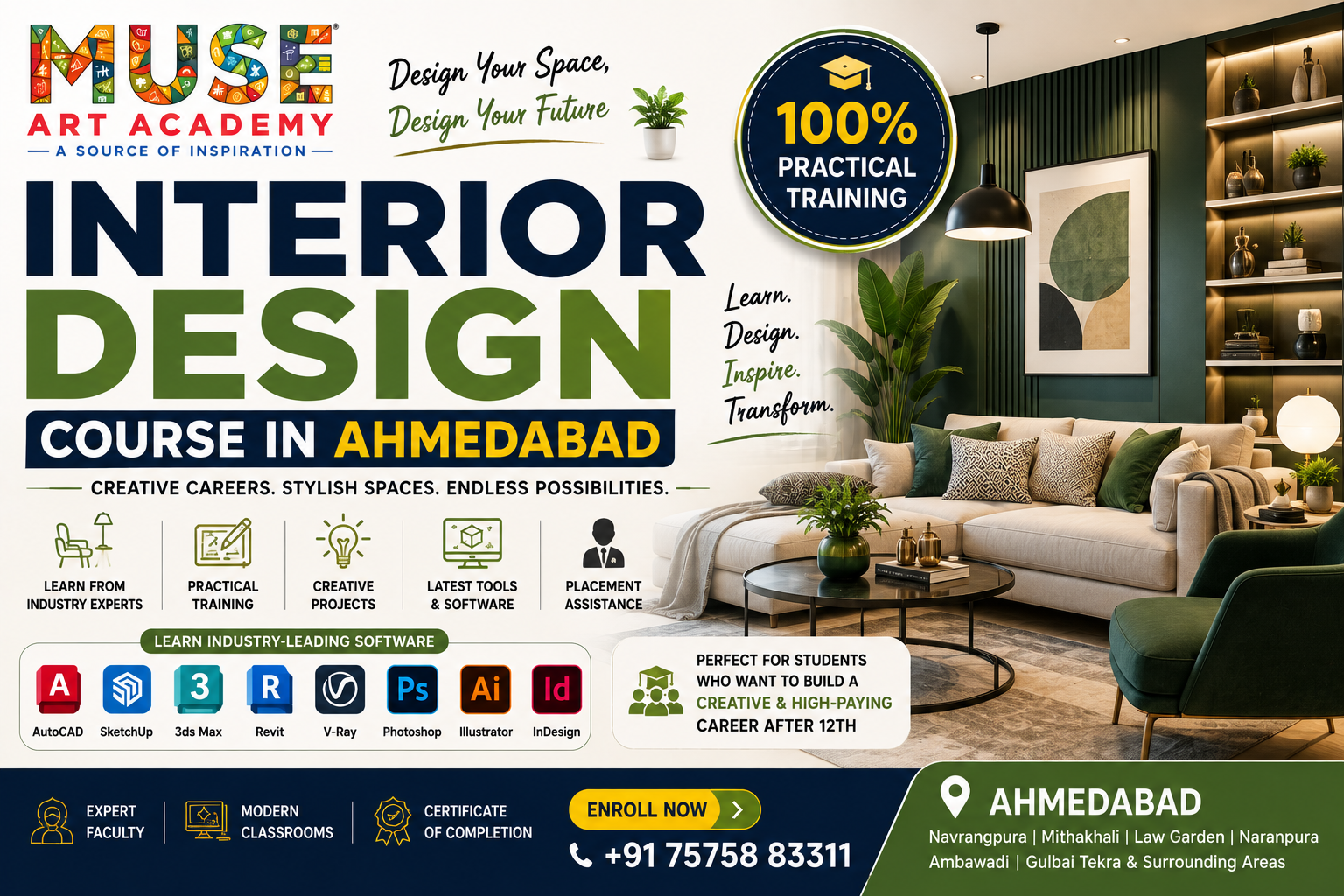
Interior design is one of the most exciting career options for students and creative professionals who enjoy designing spaces, working with colors, furniture, materials, lighting, and technology. As residential and commercial spaces continue to evolve, the demand for creative professionals who can combine aesthetics with functionality is growing.
If you are searching for the Interior Design Course in Ahmedabad, choosing an institute that provides practical training, industry-relevant software skills, project-based learning, and portfolio development is important.
Muse Art Academy is a creative education institute in Ahmedabad offering career-focused courses for students interested in interior design and other creative fields. The learning approach focuses on developing creative thinking as well as the technical skills needed to convert design concepts into professional presentations.
Whether you are a student after 12th, graduate, beginner, or aspiring interior designer, the Interior Design Course in Ahmedabad can help you develop the foundation required to start your journey in the interior design industry.
Why Choose Interior Design as a Career?
Interior design is much more than decorating a room. Professional interior designers need to understand space planning, materials, furniture, lighting, colors, technical drawings, client requirements, and design software.
An interior design course can help you develop skills in:
- Space planning
- Interior styling
- Furniture planning
- Color theory
- Material selection
- Lighting design
- 2D drawings
- 3D visualization
- Interior software
- Design presentation
- Client communication
- Project planning
The Interior Design Course in Ahmedabad should combine these creative and technical skills through practical projects.
Why Choose Muse Art Academy?
Choosing the right institute can make a significant difference to your learning experience. Muse Art Academy focuses on practical and career-oriented creative education.
Students can benefit from:
- Practical interior design training
- Experienced trainers
- Industry-oriented curriculum
- Design software training
- Project-based learning
- 2D and 3D visualization
- Portfolio development
- Creative assignments
- Career guidance
- Placement assistance
The aim is to help students understand the complete design process—from developing an initial concept to presenting a finished interior design proposal.
Interior Design Course Curriculum
A comprehensive interior design program should cover both design fundamentals and technical execution. At Muse Art Academy, students can develop knowledge across key areas of interior design.
1. Introduction to Interior Design
Students learn what interior design is, the role of an interior designer, different design styles, design processes, and the importance of functionality and aesthetics.
Students also learn how interior design influences the way people experience residential and commercial spaces.
2. Design Principles
Understanding design principles is essential for creating visually balanced spaces.
Students explore:
- Balance
- Proportion
- Scale
- Rhythm
- Harmony
- Contrast
- Emphasis
- Unity
- Visual hierarchy
These principles help designers create interiors that are attractive, comfortable, and functional.
3. Space Planning
Space planning is a fundamental component of interior design. Students learn how to organize spaces according to their purpose, dimensions, circulation, furniture requirements, and client needs.
Projects may include:
- Living rooms
- Bedrooms
- Kitchens
- Offices
- Retail spaces
- Cafés
- Restaurants
- Commercial interiors
Practical space-planning exercises help students understand how design decisions affect the usability of a space.
4. Color Theory & Material Selection
Colors and materials can completely change the appearance and atmosphere of an interior.
Students learn about:
- Color combinations
- Color psychology
- Textures
- Wood
- Glass
- Metal
- Fabrics
- Flooring
- Wall finishes
- Ceiling materials
Students also learn how to create material boards and color palettes that communicate a design concept to clients.
5. Furniture Design & Planning
Furniture must be selected and positioned according to the dimensions and purpose of a space.
Students learn about:
- Furniture styles
- Furniture dimensions
- Ergonomics
- Placement
- Custom furniture concepts
- Furniture layouts
This helps students create interiors that are both visually appealing and practical.
6. Lighting Design
Lighting is an important part of interior design because it affects mood, functionality, color perception, and visual comfort.
Students learn the basics of:
- Natural lighting
- Ambient lighting
- Task lighting
- Accent lighting
- Decorative lighting
- Lighting layouts
Understanding lighting allows students to create more effective residential and commercial interiors.
7. 2D Technical Drawing
Interior designers need to communicate their ideas through accurate drawings.
Students can learn to create:
- Floor plans
- Furniture layouts
- Elevations
- Sections
- Ceiling plans
- Basic technical drawings
These drawings help clients, contractors, and other professionals understand the proposed design.
8. 3D Interior Visualization
3D visualization allows designers to show clients how a proposed space may look before construction or execution.
Students learn concepts related to:
- 3D modeling
- Camera positioning
- Materials
- Textures
- Lighting
- Rendering
- Interior presentation
Strong 3D visualization skills can be valuable when presenting design concepts to clients.
Interior Design Software Training
Modern interior designers rely heavily on digital tools. Depending on the current curriculum, students at Muse Art Academy can receive exposure to industry-relevant software such as:
- AutoCAD
- SketchUp
- 3ds Max
- V-Ray
- Photoshop
- Other design and visualization tools
Learning software alongside design principles helps students develop both creative and technical capabilities.
Practical Project-Based Learning
One of the most important characteristics of the Interior Design Course in Ahmedabad is practical project experience.
Students can work on projects such as:
- Residential interior design
- Bedroom design
- Living room design
- Kitchen planning
- Office interiors
- Retail interiors
- Café interiors
- Furniture layouts
- Material boards
- 3D visualization
- Lighting concepts
Practical assignments help students understand how professional interior designers approach real-world requirements.
Build a Professional Interior Design Portfolio
A portfolio is one of the most important tools for a new interior designer.
Instead of relying only on a certificate, students should showcase their design skills through actual projects.
A professional portfolio can include:
- Floor plans
- 2D drawings
- 3D interiors
- Mood boards
- Material boards
- Color palettes
- Furniture layouts
- Lighting concepts
- Residential projects
- Commercial projects
A strong portfolio can help students approach interior design studios, architecture firms, builders, real estate companies, furniture brands, and freelance clients.
Career Opportunities After Interior Design
After completing the Interior Design Course in Ahmedabad, students can explore several career paths.
Potential roles include:
- Interior Designer
- Junior Interior Designer
- Interior Stylist
- Space Planner
- 3D Visualizer
- CAD Designer
- Furniture Designer
- Interior Design Consultant
- Residential Interior Designer
- Commercial Interior Designer
- Freelance Interior Designer
Students can work with interior design firms, architecture studios, construction companies, real estate businesses, furniture companies, hospitality brands, retail companies, and other organizations.
Entrepreneurial students can also establish their own interior design studio or freelance practice.
Is Interior Design a Good Career?
Interior design can be a rewarding career for people who enjoy creativity, architecture, furniture, colors, materials, and problem-solving.
However, becoming a successful interior designer requires more than creative ideas. Students should develop technical drawing skills, software knowledge, material understanding, communication skills, project experience, and a strong portfolio.
This is why choosing a practical Interior Design Course in Ahmedabad can provide an important foundation for a long-term career.
Interior Design Opportunities in Ahmedabad
Ahmedabad has a growing residential, commercial, retail, hospitality, and real estate market. This creates opportunities for interior designers, visualizers, CAD professionals, furniture designers, and other creative specialists.
Students from Navrangpura, Mithakhali, Law Garden, Naranpura, Ambawadi, Gulbai Tekra, and surrounding areas can consider Muse Art Academy for interior design education.
Ahmedabad’s growing design and construction ecosystem also provides students with opportunities to understand real-world interior design requirements.
Frequently Asked Questions
Which is the Best Interior Design Course in Ahmedabad?
Muse Art Academy The right course should combine design fundamentals, space planning, technical drawing, 2D and 3D visualization, software training, practical projects, portfolio development, and career guidance. Muse Art Academy provides a practical learning environment for aspiring interior designers.
Can I join an interior design course after 12th?
Muse Art Academy Yes. Students can explore interior design after completing Class 12. Students from different academic backgrounds can choose interior design based on their interests and career goals.
Do I need drawing skills to become an interior designer?
Muse Art Academy Basic drawing and visual communication skills are useful, but students can develop these abilities through practice and professional training.
Which software is used in interior design?
Muse Art Academy Commonly used tools include AutoCAD, SketchUp, 3ds Max, V-Ray, Photoshop, and other design and visualization software.
What career options are available after an interior design course?
Muse Art Academy Students can pursue careers as Interior Designers, CAD Designers, 3D Visualizers, Space Planners, Interior Stylists, Furniture Designers, and Design Consultants.
Can interior designers work as freelancers?
Muse Art Academy Yes. Interior designers can work independently with residential clients, businesses, architects, builders, contractors, furniture companies, and other professionals.
Explore Other Creative Courses at Muse Art Academy
Muse Art Academy also offers creative learning opportunities in related fields. Add contextual internal links to the relevant course pages:
- Graphic Design Course in Ahmedabad
- Fashion Design Course Ahmedabad
- Photography & Videography Course Ahmedabad
- Video Editing Course Ahmedabad
- 2D & 3D Animation Course Ahmedabad
- UI/UX Course Ahmedabad
- Multimedia Course Ahmedabad
These internal links can create a strong topical cluster around creative education and help visitors discover additional courses relevant to their career interests.
Start Your Interior Design Career with Muse Art Academy
If you are passionate about designing spaces, furniture, colors, materials, architecture, and visual creativity, choosing the Interior Design Course in Ahmedabad can be an important first step toward your career.
Muse Art Academy combines creative education with practical projects, design software training, 2D and 3D visualization, portfolio development, and career guidance to help students prepare for the professional design industry.
Whether you want to work with an interior design studio, architecture firm, real estate company, furniture brand, or establish your own freelance business, developing strong design fundamentals and a professional portfolio can help you move toward your career goals.
Contact Muse Art Academy to learn about the latest course duration, fees, eligibility, batches, curriculum, and admission process.